

What this analysis can—and cannot—say
Google's three-leader period is often summarized as investors bringing in “adult supervision.” That phrase is memorable and analytically weak. It reduces Page and Brin to gifted but unmanageable founders, and Schmidt to a chaperone. Their own accounts describe a more deliberate exchange of capabilities and authority.
The duo had a scale problem, not a founder deficit
Page and Brin met at Stanford, developed a new approach to ranking web pages, and built Google around a strong technical and product culture. By 2001, the company was growing quickly, hiring experienced executives, dealing with major partners, and confronting decisions that no longer belonged only to search engineering.
The founders did not need someone to supply ambition or product judgment. They needed operating experience at a scale neither had yet managed. Schmidt had run large technology organizations and understood executive hiring, commercial partnerships, and the organizational cadence of a growing company.
Page later told Schmidt that Google might not need him at that moment, but would need him for the future. That distinction is the core of the decision. A third leader can be hired for the company the founders are about to enter, not as a verdict on what they have already built.
The best third leader adds a missing dimension. If the person is only there to arbitrate a founder dispute, the underlying two-person system remains broken.
They negotiated a real division of work
Schmidt described Page and Brin as heavily involved in product reviews. His own responsibilities centered on hiring, the executive team, partners, and commercial deals. This was not a ceremonial CEO layered above the founders. Nor was it a conventional CEO with unrestricted control over product.
The arrangement protected what was distinctive about the founders while adding the machinery required to scale it. Page and Brin kept substantial product influence and voting power. Schmidt received enough operational authority to make his experience useful.
That balance matters. An experienced executive cannot contribute if every decision is reversible by founders who remain informally in charge. Founders, meanwhile, will resist a leader whose mandate requires them to surrender the product instincts that created the company. Google's model worked because the constraint was explicit on both sides.
The third leader added cadence
When Schmidt arrived, he found a company with almost no regular meetings. He introduced a frequent executive rhythm. The change sounds mundane beside Google's technology, but meeting cadence is part of decision architecture: it determines when information is shared, who has to attend, and how long an unresolved issue can drift.
Schmidt also described decisions as iterative group work. Debate created buy-in, and the three leaders generally avoided unilateral action on important subjects. This was not a simple two-out-of-three voting system. Their accounts emphasize discussion until a stronger answer emerged.
There was still an endpoint. Schmidt said the CEO retained ultimate responsibility in the rare cases where law, regulation, or corporate duty required a final call. Consensus was the normal method; accountable authority was the backstop.
Consensus works better when someone still owns the consequence. Without a backstop, a commitment to agreement can become an unlimited veto.
Shared goals made unusual governance possible
Schmidt has said the three leaders disagreed about mechanisms more than fundamental goals or ethics. That alignment gave them room to argue intensely about how to proceed without constantly reopening what the company was for.
The arrangement also demanded unusual restraint. Schmidt could not insist on the autonomy normally associated with a CEO title. Page and Brin could not treat his experience as advice they were free to ignore. A third leader is therefore not merely a résumé. The role requires a founder pair willing to share the system, and an executive willing to operate inside founder-specific constraints.
The model had a stage—and an ending
Page became CEO again in 2011, with Schmidt moving to executive chair. This does not make the earlier model a failure. The capabilities required in 2001 were no longer missing in the same way ten years later. Page had gained leadership experience; Google had acquired processes and a deep executive bench.
A governance model should not be preserved for sentimental reasons. The relevant question is whether it still fits the company's stage and the leaders' capabilities.
Their likely CofounderFit profiles
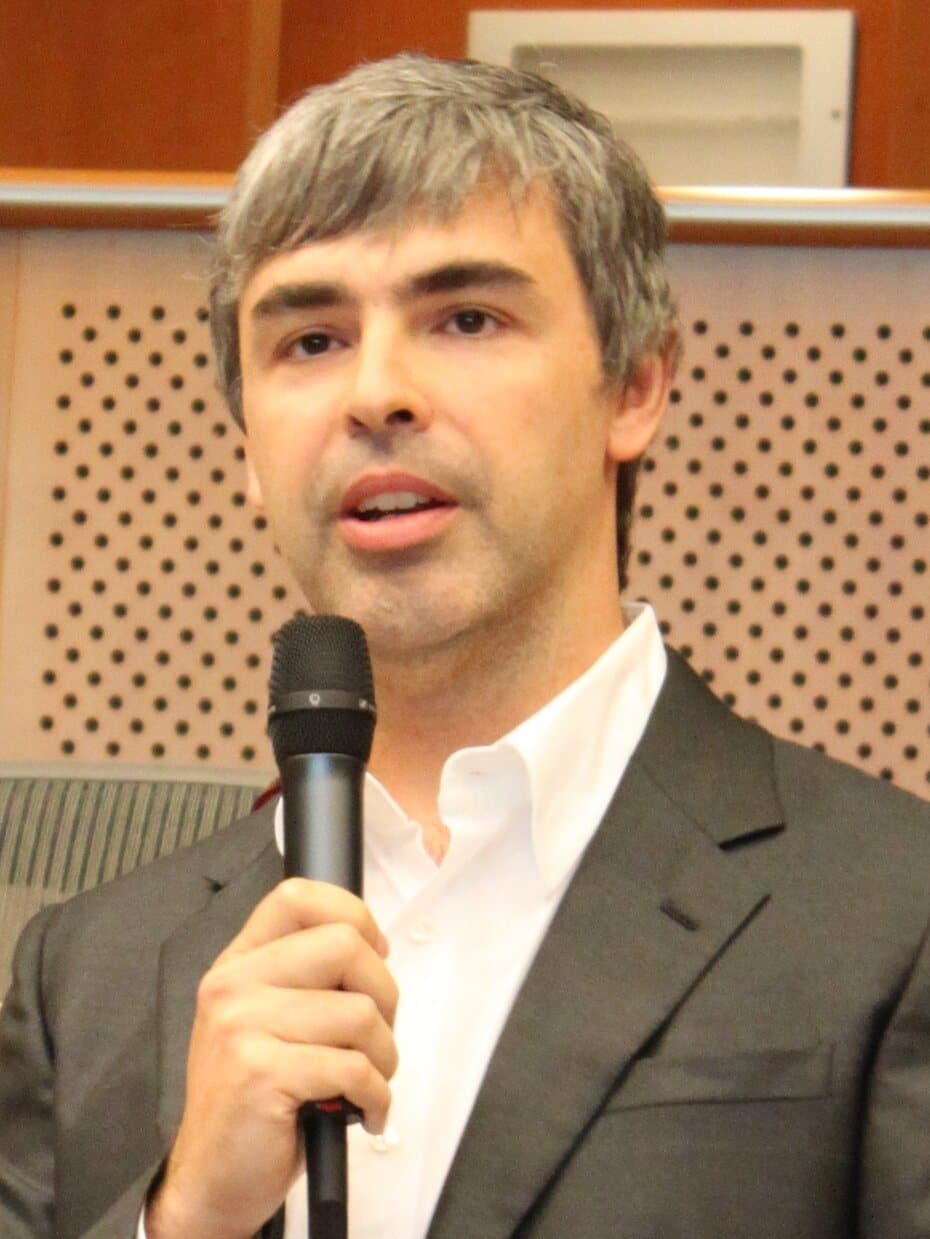
Larry Page: the visionary architect
Confidence: high. Page consistently connected technical possibility to a long-range product and company direction while retaining strong influence over consequential choices.
- Long-horizon product conviction
- Systems-level thinking
- High standards for technical ambition
- Preference for structural solutions
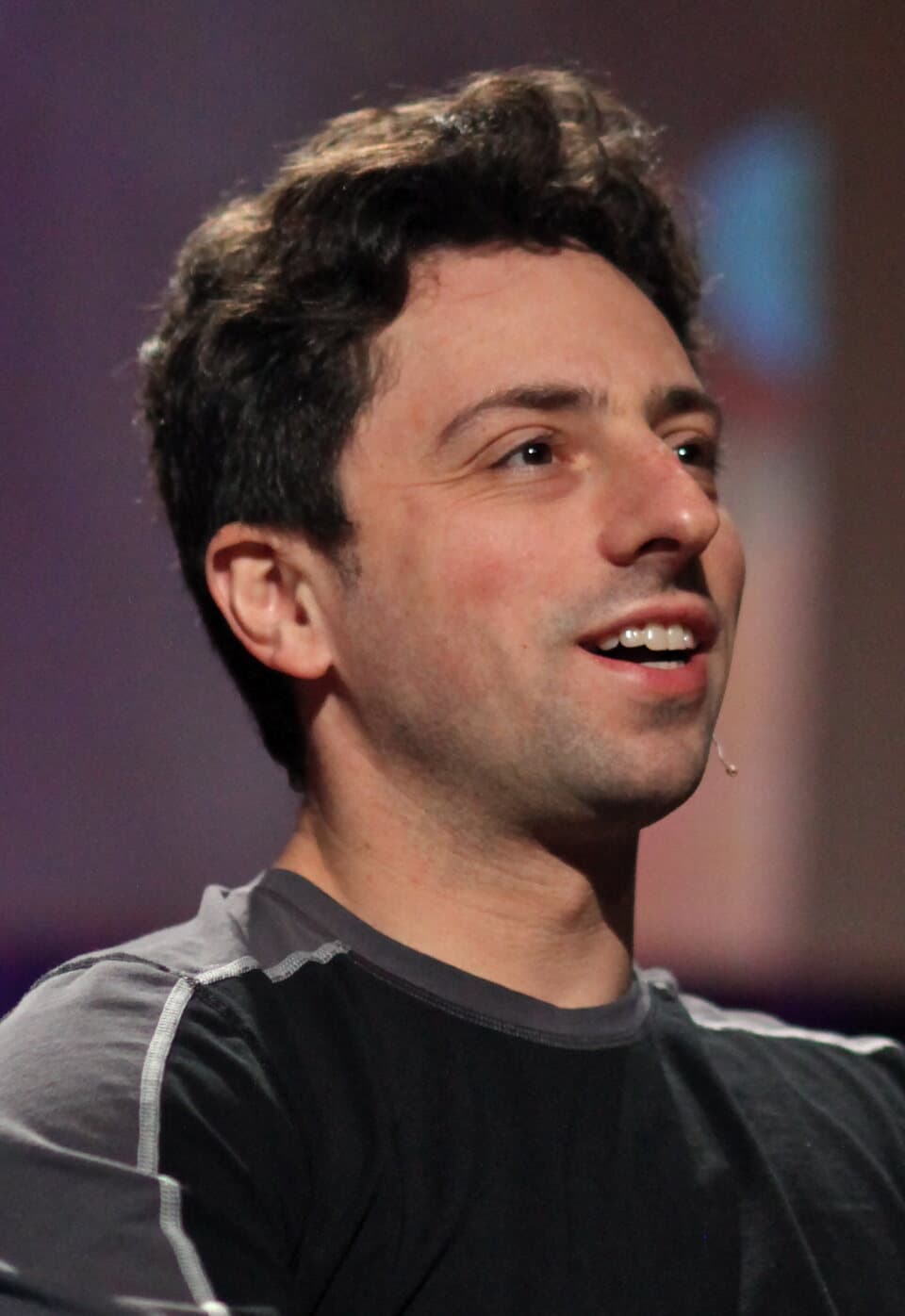
Sergey Brin: the risk maverick
Confidence: medium. Public accounts portray Brin as experimental, intellectually wide-ranging, and willing to explore projects outside the core business.
- Curiosity across multiple domains
- Comfort with ambitious experiments
- Informal, probing decision style
- Strong founder-level independence
Eric Schmidt: the diplomatic negotiator
Confidence: high. Schmidt's role depended on coordinating powerful founders, executives, partners, and formal corporate responsibilities without flattening their differences.
- Organizational and stakeholder fluency
- Consensus-building through debate
- Clear sense of accountable authority
- Experience translating vision into operating cadence
These are editorial comparisons with CofounderFit archetypes, not measured profiles. Public sources are strongest on leadership and decision-making, and weaker on the leaders' private behavior beyond Google.
When a duo should consider a third leader
Google's history does not establish a general rule that young founders need an older CEO. It offers a more precise test. A duo may need a third leader when the next company stage requires a capability neither founder possesses, both want to preserve their highest-value contribution, and decision rights can be made credible to all three.
The appointment will fail if it disguises an unresolved founder conflict, grants a title without authority, or asks the founders to disappear from the domain where they create exceptional value. It has a better chance when the role fills a named gap, introduces a useful operating system, and includes a clear way to evolve later.
Five questions their story poses to your founder team
- Which next-stage responsibility does neither founder currently own well?
- Do you need an adviser, an operator, or a leader with genuine final authority?
- Which founder decisions must remain protected after a senior hire joins?
- How will three leaders disagree without relying on permanent unanimity?
- What evidence would show that the governance model should change again?
Name the missing capability before naming the person. CofounderFit helps founder teams clarify roles, authority, and decision styles before adding another leader to the system. Discover your founder profile.
Sources and versions consulted
- A Conversation With Google CEO Eric Schmidt, Wired. Schmidt explains the division between product reviews, executive hiring, partnerships, and deals.
- My Other Interview With Eric Schmidt, Wired. Covers the negotiated role, meeting cadence, group decisions, and the CEO's ultimate responsibility.
- A Master Class in Google, Wired. Schmidt reflects on the trio's debate-driven model, aligned goals, and aversion to unilateral decisions.
- 2004 Founders' IPO Letter, Alphabet Investor Relations. Page and Brin explain the company's unconventional governance and refer to running Google with Schmidt.
- 2007 Founders' Letter, Alphabet Investor Relations. Page describes the three leaders' continuing working relationship.
- 2011 Founders' Letter, Alphabet Investor Relations. Page discusses the leadership transition and continuing shared control.